The Bay of Kotor is often described as the southernmost fjord in Europe. It is actually a ria, a river valley drowned by the sea, which explains the steep slopes that drop straight into the water. Along barely thirty kilometres of shoreline, it brings together a fortified old town, villages of sea captains, a sanctuary islet and winding roads. The whole area has been a UNESCO World Heritage Site since 1979.

How many nights?
Three nights make a good base for a first visit. Two nights are enough if you are continuing inland afterwards. Beyond four, the bay alone starts to repeat itself, unless you use it as a base for Lovćen, Cetinje and the coast.
- Day one: explore Kotor’s old town on foot, without a packed schedule.
- Day two: the ramparts at opening time, then Perast and Our Lady of the Rocks (Gospa od Škrpjela).
- Day three: a trip to Lovćen and Cetinje, or a stroll along the coast and the village of Dobrota.
Kotor’s old town
The old town is closed to traffic and is explored on foot. Its lanes, squares and churches fit within a compact area, enclosed by medieval walls that were reworked under Venetian rule. The Cathedral of Saint Tryphon, consecrated in 1166, is its main monument.
The main issue is crowds. On cruise-ship days, the old town fills up during the day. Come early in the morning or toward the end of the day, and check the port’s cruise-ship calendar before choosing your day to visit.
The ramparts and San Giovanni Fortress
This is Kotor’s signature visit: 1,350 stone steps and about 280 metres of elevation gain, from the old town up to San Giovanni Fortress, which overlooks the bay. Allow 45 to 60 minutes going up and 25 to 30 minutes coming down, or 1.5 to 2 hours including breaks.

| Item | What to know |
|---|---|
| Entrance | Paid ticket, per person. The price is not reliably listed in the sources consulted: to be confirmed on site or on the official website. Card payment is generally possible at the ticket office, but bring euros as a backup. |
| Opening hours | 1 May – 30 September: from 7 am. 1 March – 30 April: 8 am – 6 pm. 1 October – 30 November: 8 am – 5 pm. December to the end of February: ticket offices closed, climb at your own risk. |
| Best time | At opening, around 8 am: few people, golden light, bearable heat. Second choice: after 4 pm, with a torch for the descent. |
| Avoid | 10 am – 3 pm in July and August: no shade in the upper section. Rain: the steps become slippery. |
| Gear | 1 to 1.5 litres of water per person (no water points along the route), shoes with good grip, a hat, a small backpack. |
More challenging. There is a free alternative, the “Kotor ladder” (Ladder of Kotor): a longer and more demanding trail that starts outside the walls and climbs to 940 m above sea level. Allow 3 to 6 hours for the round trip. Recommended only for properly equipped hikers.
Perast and Our Lady of the Rocks
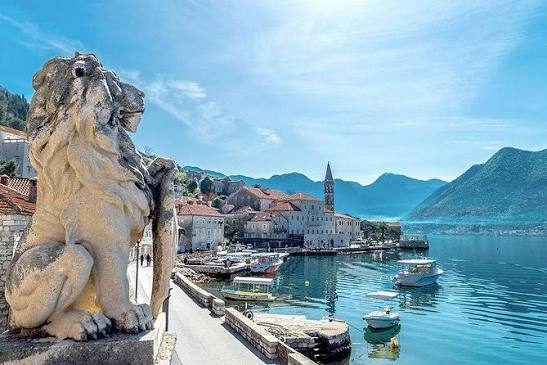
Perast is a village stretched along a single main street, squeezed between the mountain and the water, 14 km from Kotor (about 15 minutes by car). Its Baroque captains’ palaces and its two islets give it the most photographed setting in the bay.

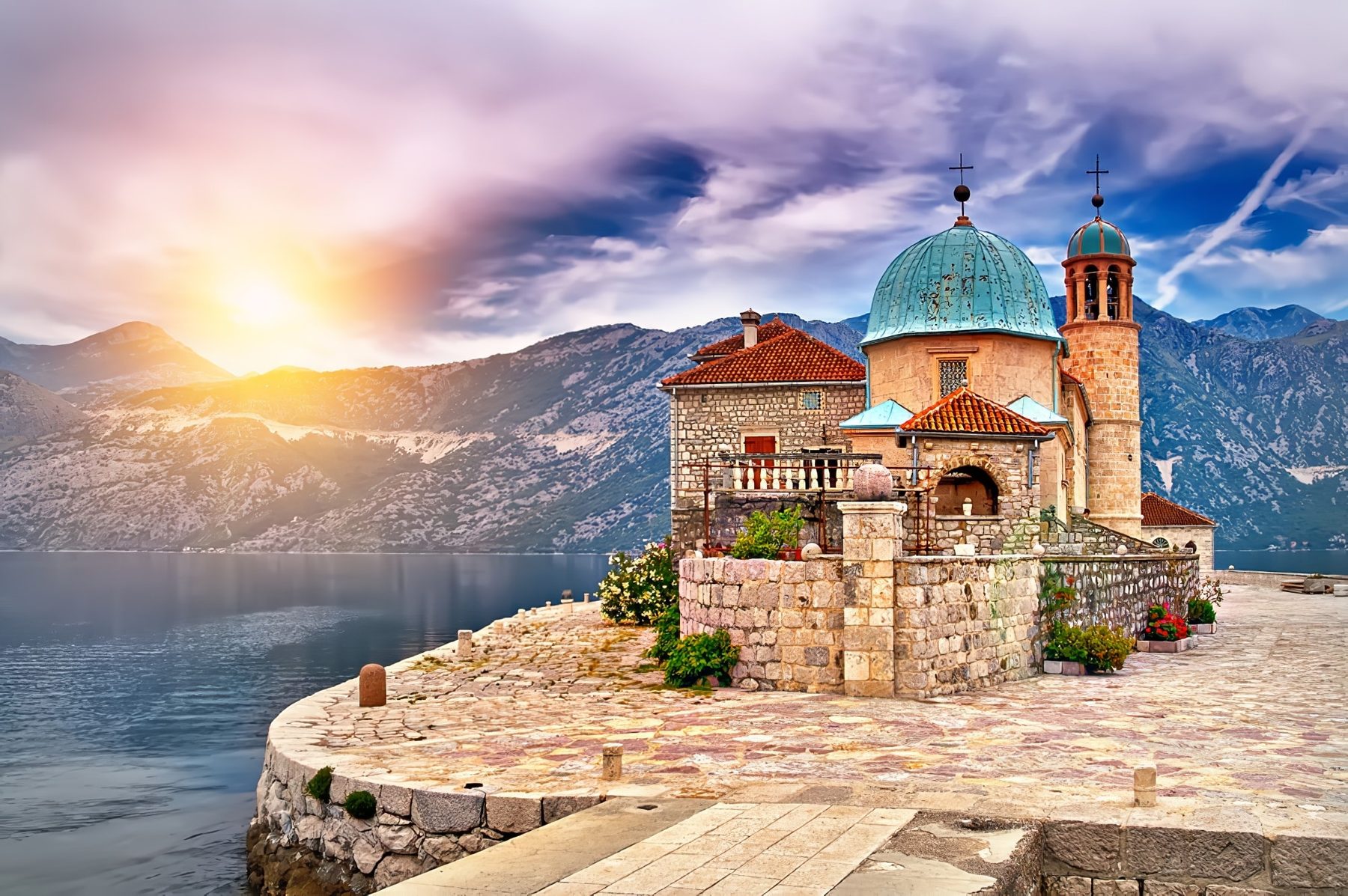
- Our Lady of the Rocks island: the church (1630) holds about 2,500 silver votive plaques and 68 paintings by Tripo Kokolja. The crossing takes about five minutes. The fare is set by the boatman: agree on it before boarding, payment in cash. A visit to the island takes 30 to 40 minutes.
- Perast Museum (Bujović Palace): €8 (€5 for under-12s). Open Tuesday to Sunday, 8 am to 8 pm from 15 April to 15 October, 10 am to 4 pm the rest of the year. Closed on Mondays.
- St Nicholas bell tower: €2 in cash, 150 steps, 55 m high.
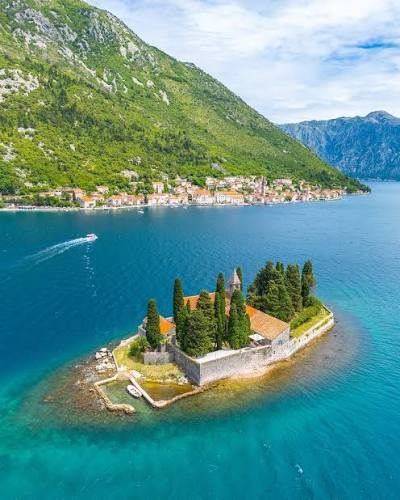
- St George’s Island (Sveti Đorđe), the other islet, is not open to the public: you admire it from the shore.
| Option | Duration | Cost | Note |
|---|---|---|---|
| Bus (Blue Line) | ≈ 35 min | €2 | About one per hour, fewer on Sundays. Delays of 15 to 30 minutes are common on the return trip. |
| Taxi | ≈ 15 min | €15 to 20 one way | There are no taxis waiting in Perast: plan your return. Round trip with waiting time: €40 to 60. |
| Car | ≈ 15 min | Paid parking, cash only | Two small car parks, often full by mid-morning in high season. |
The best times to visit are before 11 am (the village faces east) or between 4 and 6 pm, once the excursion buses have left. The best times of year are late April to early June and mid-September to mid-October.
Where to stay in the bay
- Kotor old town: atmosphere, but evening noise and tricky access with luggage. No cars inside.
- Dobrota: north of Kotor, with a coastal promenade leading to the old town. Quieter, with water views.
- Perast: very beautiful but small, with few places to stay and a limited choice of restaurants in the evening.
- Tivat and surroundings: convenient for the airport and services, with less historic charm.
If you are coming by car, always check the parking situation before booking: it is the real deciding factor in the bay.
Getting around the bay
In the bay, ten kilometres tells you almost nothing about the travel time. The coastal road is narrow and summer traffic clogs it. The local bus (Blue Line) links the villages of the bay for a few euros, with taxis as the fallback. For a day trip to Lovćen and Cetinje, a car is still the simplest option (see the car-free stay).
From Tivat airport, the shuttle to Kotor takes about 20 minutes and costs about €5 according to 2026 surveys (details on the Getting there page).